Residential
Choosing Aluminium Windows and Doors for a Sutherland Shire Home
Choosing aluminium windows and doors in the Sutherland Shire is less about picking a colour and more about matching frames, glass, hardware and sealing to the way a particular house is exposed. A home two streets from Cronulla beach and a home tucked into a leafy street in Engadine face very different conditions, and the specification should reflect that.
Most homes across the Shire share a few common pressures: salt-carrying air, strong afternoon sun, heavy rain arriving on the wind, and a preference for opening the back of the house up to the yard. Aluminium handles all of that well when it is specified and installed properly. The difference between a window that still runs smoothly in ten years and one that binds, leaks or corrodes usually comes down to decisions made before anything is manufactured.
Why aluminium works well in the Sutherland Shire
Aluminium is dimensionally stable, so frames hold their shape through hot summers and damp winters without swelling or dropping out of square. That stability is a large part of why sliding panels keep operating properly over time.
The other practical advantage is the profile. Aluminium is strong enough to carry large panes in a slim frame, which means more glass and less framing across an opening. On homes in Sylvania or Cronulla where the outlook is the point, that matters.
- Slim sightlines on large openings, including full-height glazed panels
- Powder-coated finishes in a wide range of colours to suit brick, render or cladding
- Straightforward pairing with flyscreens, security screens and privacy glass
- Suits staged renovations because units are made to the existing opening sizes
Aluminium is low maintenance, not maintenance free. Frames still need periodic washing, tracks need to be kept clear, and drainage holes need to stay open. That applies everywhere, and it applies more often the closer a home sits to the water. Our aluminium window and door installations are specified with that ongoing upkeep in mind.
What coastal conditions change
Salt does not attack the aluminium itself so much as it settles on surfaces and sits there. Where it collects on hardware, in tracks and around fixings, it accelerates wear. Homes in Cronulla, Woolooware and along the Bate Bay side see this far more than homes further inland.
Frame and hardware selection
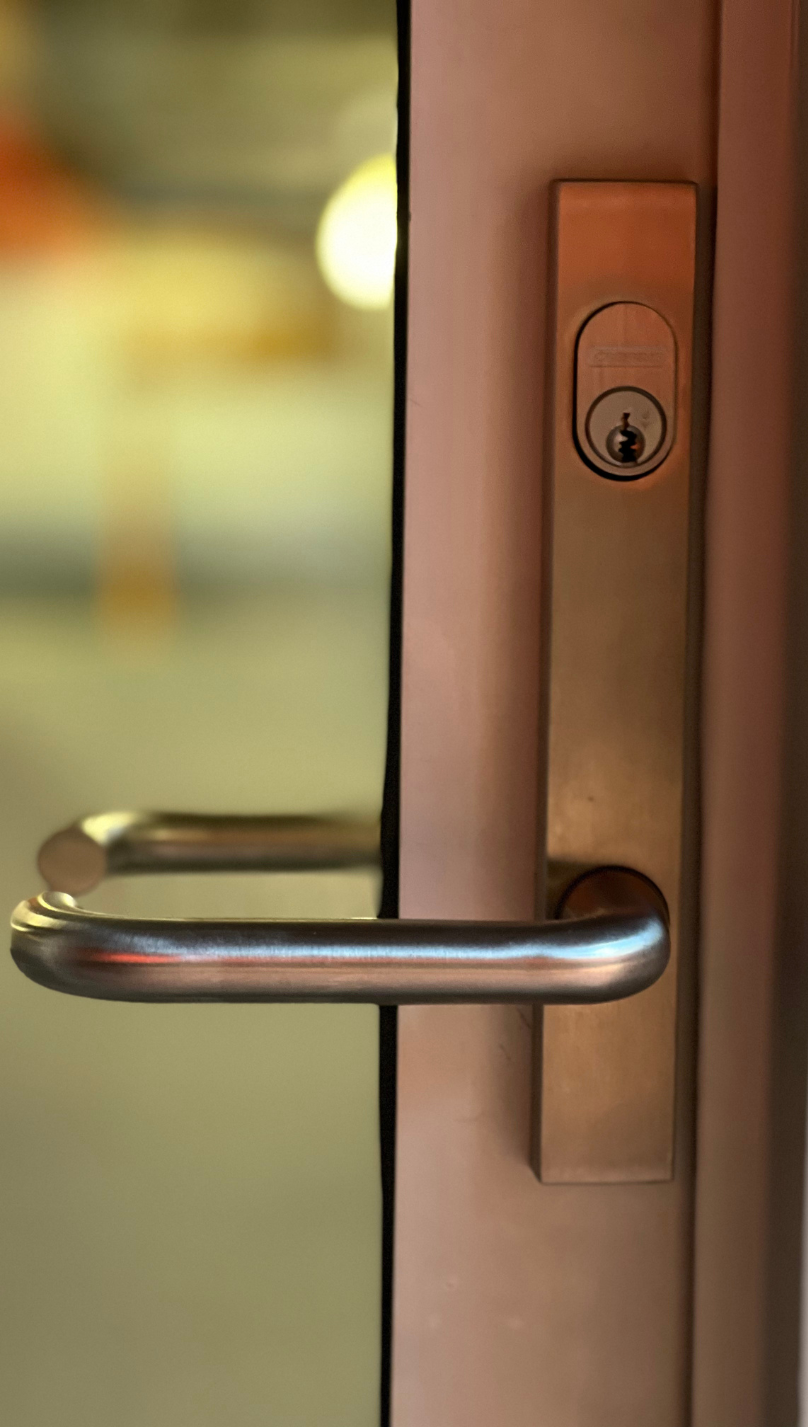
Frames and hardware should be chosen for the exposure of the individual elevation, not the average across the house. A west-facing wall taking wind off the water needs more thought than a sheltered courtyard window. Locks, rollers, hinges and fasteners are typically the first components to show wear, so it is worth asking what is being supplied rather than accepting a generic hardware line on a quote.
Powder-coated finishes and cleaning
Powder coating protects the frame, but only while the coating stays intact and reasonably clean. Rinsing frames and tracks with fresh water a few times a year removes the salt build-up before it does damage. Avoid abrasive cleaners and harsh solvents, which can dull or damage the finish.
Drainage and weather sealing
Aluminium windows are designed to manage water, not to keep every drop out of the frame. Water that enters the sill is meant to drain back out through weep holes. If those are blocked by dirt, sand or an over-enthusiastic bead of silicone, water sits in the frame and eventually finds its way inside.
This is where installation quality shows up. Sealing at the perimeter, correct flashing, and keeping drainage paths clear are the parts of the job that are invisible on handover day and obvious in the first heavy southerly.
Choosing the right window configuration
Configuration should follow how the room is used and how weather hits that wall.
- Sliding windows — no external swing, so they suit walkways, decks and narrow side setbacks. Good for wide openings where you want half the area openable.
- Awning windows — hinged at the top, so they can often stay open in light rain. A common choice for bathrooms, kitchens and bedrooms in exposed locations around Kirrawee and Gymea.
- Casement windows — swing wide for maximum airflow and can catch a breeze. Less suitable where the sash would swing over a path or against strong prevailing wind.
- Fixed glazing — no moving parts, best sealing performance, ideal for capturing an outlook where ventilation comes from elsewhere.
- Larger feature windows — worth considering where an opening is the focal point of a living area, though glass weight, structural support and cleaning access all need to be resolved early.
Most homes end up with a mix. A living room might combine a large fixed pane with awning sashes at either side, which gives the view without giving up ventilation.
Sliding, bifold or stacker doors
The back of the house is usually where the budget goes, and all three systems are defensible choices depending on the opening.
Sliding doors
The default for good reason. Panels stay within the opening, tracks are simple, and maintenance is limited to keeping the track clear and the rollers in good order. Around half the opening is clear when open. Screens are easy to integrate.
Bifold doors
Bifolds fold back and open almost the entire span, which suits entertaining. The trade-offs are real: stacked panels need somewhere to sit, there are more hinges and moving parts to maintain, and screening a bifold is more involved than screening a slider. They generally cost more than an equivalent sliding door.
Stacker doors
A middle path. Multiple panels slide and stack together, giving a wider clear opening than a standard slider while keeping the simplicity of a track system. They need enough wall or frame width for the stacked panels to sit against.
Practical points worth weighing before you decide:
- How wide the opening actually is, and how much clear opening you want
- Whether there is wall space for panels to stack against
- Traffic flow — a door used ten times a day is different to one opened at Christmas
- Flyscreen requirements, which are often an afterthought and shouldn't be
- Threshold height and whether a flush finish is being chased
- Budget, including screens, hardware and any structural work
Glass options for comfort and privacy
Glass selection depends on the room, orientation and what sits on the other side of the wall. There is no single correct answer for a whole house.
- Standard float glass — suitable in many locations where safety glass is not required.
- Safety glass — required in specific situations such as low-level glazing, doors and areas near wet floors. Requirements are set by the applicable Australian standards and should be confirmed for each opening.
- Toughened glass — stronger than standard glass and breaks into small fragments. Common in doors and large panels.
- Laminated glass — an interlayer holds the glass together if it breaks, and it also helps with noise and UV.
- Double glazing — can improve thermal comfort and reduce noise, though it adds weight and cost and is not necessary on every opening.
- Tinted or obscure glass — useful for glare on western elevations, or for bathrooms and windows facing a neighbour.
Our glass and glazing services cover supply and replacement for both new units and existing frames, which matters if only one or two panes need attention.
Replacing older windows during a renovation
Replacement work in an established Shire home is mostly about the openings, not the windows. Brick homes across Miranda and Caringbah were often built with openings that are no longer perfectly square, and reveals may have been altered by earlier renovations.
A typical sequence looks like this:
- Measure each existing opening individually rather than assuming they match
- Remove the old frame carefully to limit damage to brickwork and internal linings
- Check the opening for square, plumb and any water damage before fitting
- Install and pack the new unit, then seal the perimeter properly
- Reinstate reveals, architraves and external trims to a clean finish
Where a builder is involved, timing is everything. Windows generally need to be in before internal linings and finishes, and the manufacturing lead time has to be allowed for in the programme. We plan residential aluminium projects around those dates rather than turning up and hoping the site is ready.
Questions to ask before accepting a quote
Two quotes for the same house can differ by thousands because they include different things. Before you sign anything, confirm:
- Is the price for supply only, or supply and installation?
- Which frame system is being used, and what finish is specified?
- What is the glass specification for each opening, including any safety glass?
- What hardware is included — locks, rollers, hinges, handles?
- Are flyscreens or security screens included or priced separately?
- Is removal and disposal of the old units part of the price?
- How will the perimeter be sealed, and who reinstates trims and reveals?
- Is the scope of work written down, including exclusions?
- What is the lead time, and how many days on site should be allowed?
If a quote is a single line and a number, ask for it in more detail. A clear written scope protects both sides. You can see the type of work we take on across the recent aluminium projects page.
Planning a window or door project in the Shire?
Send TK Aluminium a few photos, plans or measurements and we'll organise a free on-site assessment and fixed-price quote.